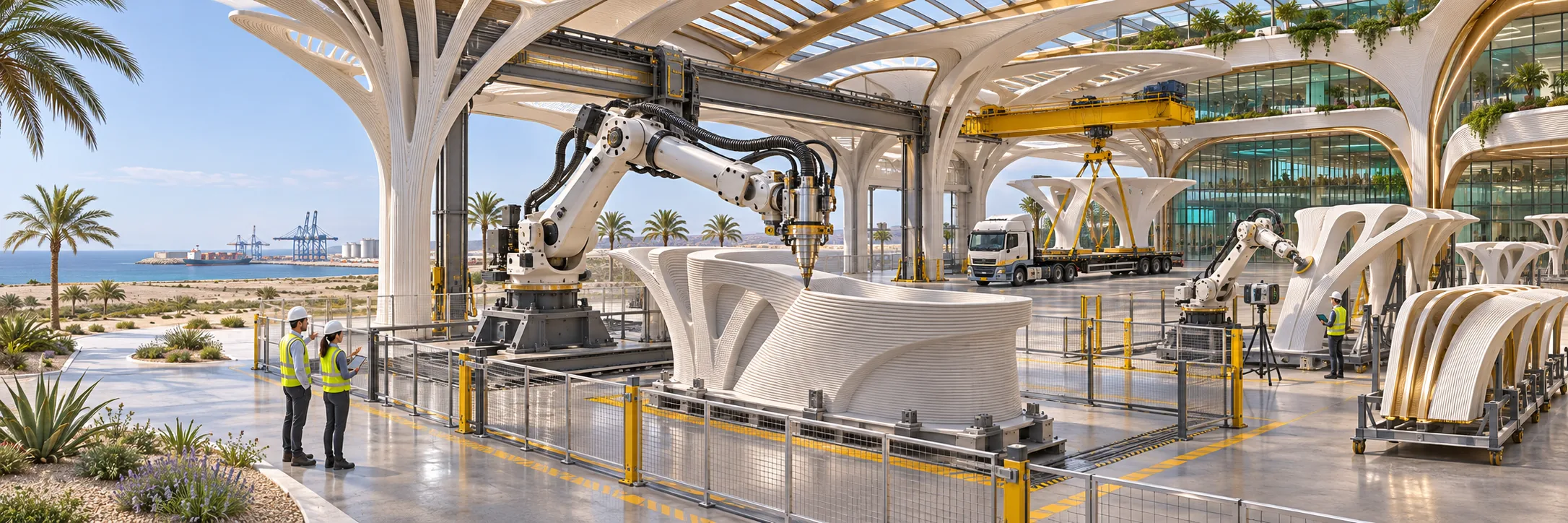
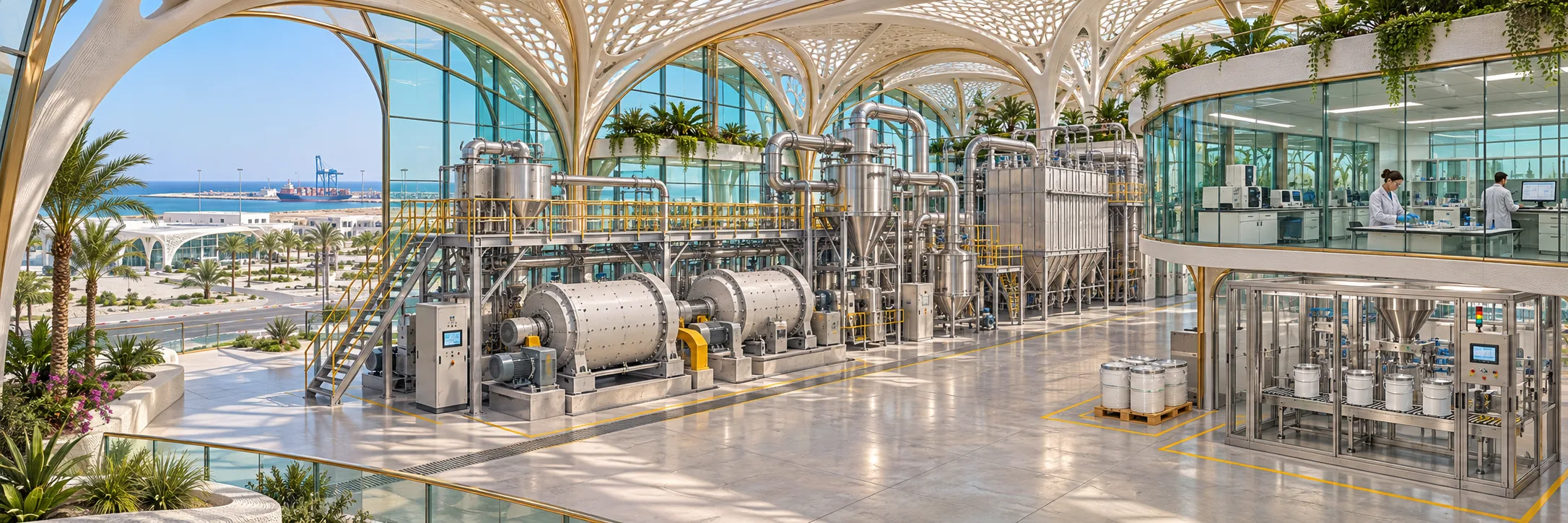
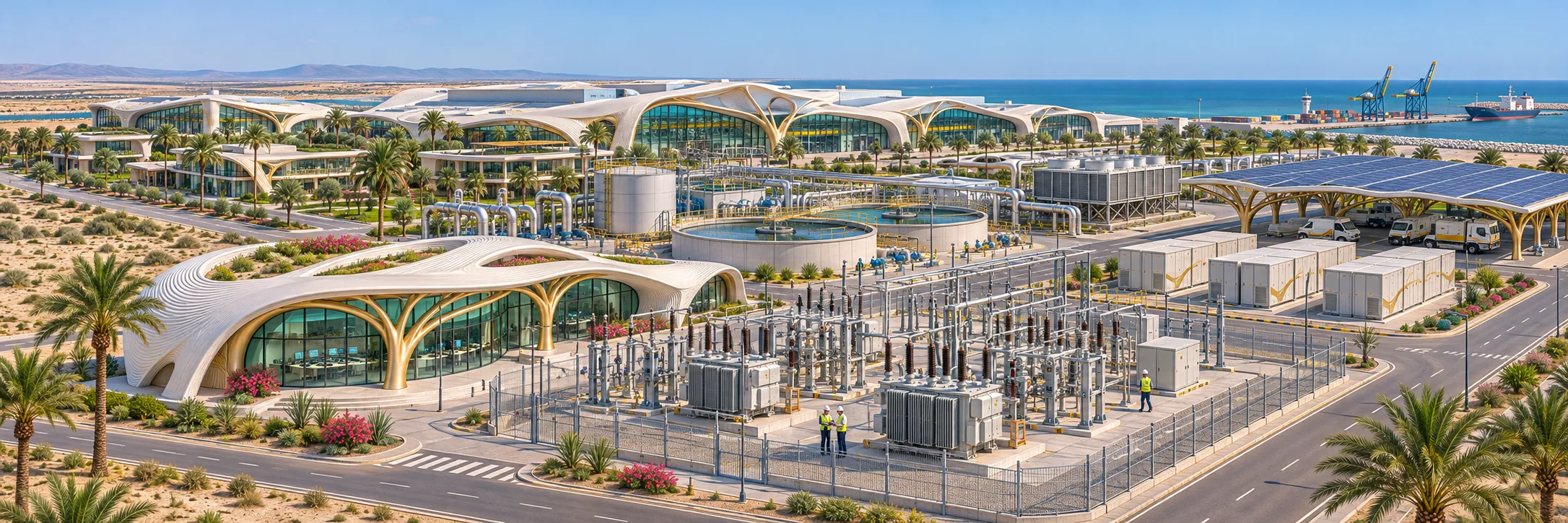
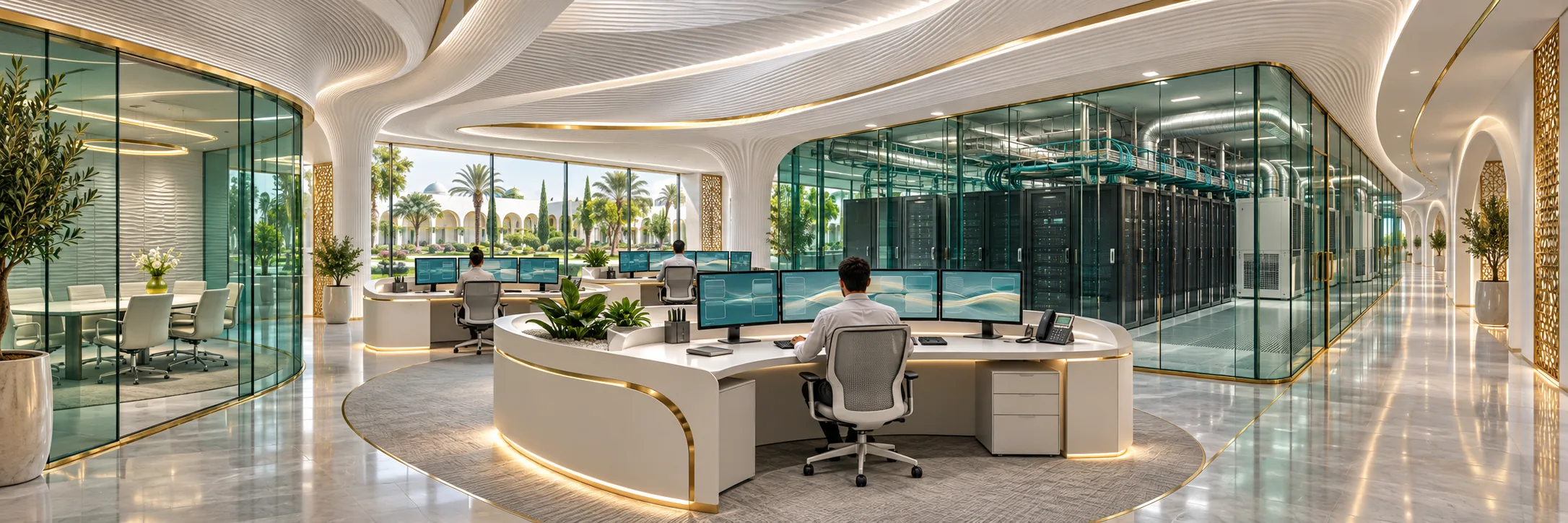
Create the robotic and additive-manufacturing facilities that turn qualified materials and engineering designs into industrial components and construction systems. The programme’s futuristic architecture is supported by a practical manufacturing base: large work cells, controlled material delivery, robotic movement, finishing, inspection and assembly. This phase connects the nanopowder workstream with component development while also supporting the wider construction programme. Production layouts are organised around the dimensions, equipment and handling needs of the products being developed, with clear access for maintenance and delivery.
Scope of delivery
Develop robotic and additive-manufacturing work cells around the selected materials, component families and production methods.
Install material-feeding, machine-control, extraction and utility interfaces in coordination with the manufacturing equipment.
Provide finishing, inspection, assembly and maintenance areas connected to the main production workflow.
Link manufacturing data, component identification and handling requirements with engineering, construction and dispatch teams.
What this phase hands over
Installed manufacturing cells with defined operating envelopes, services, controls and maintenance access.
Component-development records linking design requirements, material specifications, production settings and inspection results.
Assembly and dispatch routes suitable for the dimensions, weights and protection needs of the manufactured products.
Operational handover information for manufacturing teams, maintenance staff and the construction packages using the outputs.
Additional construction view · Milestone 10
The work behind the investment.
Robotic 3D printing and manufacturing. This large construction view develops the work package within the expanded harbour and AVIS industrial-park masterplan.
Milestone 10 · Robotic 3D printing and manufacturing · AVIS construction development
Construction payment 10 · 10%€250,000,000
AVIS-TN-10 Main construction investment including the harbour
Translate sculpted façades, branching structures and service modules into component families with defined interfaces. A consistent construction system supports repeatable fabrication and efficient assembly while allowing the visual variety associated with AVIS design. The engineering model connects each component to its place in the finished structure.
Large work cells with clear movement
Organise robots, machine envelopes, material delivery and component removal as one production layout. Provide the lifting, access and maintenance space required by the actual equipment. Protect clear routes for people and services so the work cell remains practical throughout its operating cycle.
From design to delivered component
Connect design information with production records and inspection. Each component moves through a defined process from material input to dispatch, carrying the information required by the next team. Construction and industrial customers receive components organised around their installation and assembly requirements.
Execution logistics
Connect the work.
Plan equipment installation before finalising the production hall’s access and lifting arrangements. Oversized components need a complete route from machine to finishing, inspection, assembly and dispatch. Coordinate this internal route with the freight roads, rail interfaces and terminal areas that serve the manufacturing campus.
Delivery interfaces
Milestone & handover
Manufacturing milestone: robotic production, component inspection and dispatch operate as a coordinated industrial work package.
Qualified material specifications and the wider engineering programme define the inputs and intended applications for manufacturing development.