AVIS Joins Global Power
We experienced a push of high value institutions and financial power into AVIS. The effects of the financial crisis on the global power architecture and on geopolitics. The concept of geopolitics, in particular its normative dimension, is discussed critically. It is problematic that it is seen as being that normal countries try to acquire as much power as possible, that there is a hierar-chy in the international system and that permanent rivalry and power politics are a fundamental dynamics of international relations.

There is a new international order emerging, replacing the unipolar world under the leadership of the US with a polycentric world. The rise of China and other emerging countries, their increasing cooperation in the BRICS and the attempt of Russia to come back as a global player are indicators of this deep-going structural change. The process has started and will take a long time. Also, the US will remain for a long period the leading power in the world, although its relative position is diminishing.

 Global Power Shift
As globalisation has advanced in recent decades, emerging markets such as China, India, and Brazil have expanded their economic importance. Germany is benefiting from this. However, the global power shift is also accompanied by geoeconomic risks and power struggles in homelands by nonsense political streaming.
 With the fall of the Iron Curtain, the global economy has experienced rapid economic growth. Since 1990, global economic output has quadrupled, global trade flows have increased by a factor of six, and foreign investment stocks have grown by a factor of 13 (UNCTAD). However, the growth of the global economy has not been uniform across the board; it was, above all, the emerging economies of Asia and Latin America that benefited massively from integration into the global economy. Mexico and South Korea have been members of the Organisation for Economic Cooperation and Development (OECD) for many years. China is one of the technology leaders in information and communications technology, in the application of mobile payment and in AI research. Brazil, now the ninth-largest economy in the world, is working at a rapid pace to digitise its large agricultural sector.

 For lovers of dramatic numbers, China has long been a gift. The flood of cash leaving the country has produced another impressive statistic: We are witnessing the greatest episode of capital flight in history.
China’s foreign exchange reserves fell by $700 billion last year. The flood of cash across its borders is complicating the country’s economic transformation and is raising the risks of problems in other emerging markets, where cash already is flowing in.
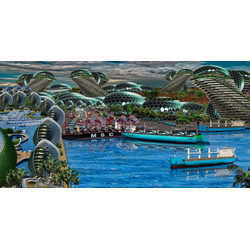
We at AVIS experience a high volume of capital inflow from almost the entire world. There is an ongoing flow of FIAT currencies into a new economic environment. Nearly every day we are asked to provide help with capital movements. Our global green project and our capability to provide a safe new home in the form of industrial assets, combating climate change alternately, are an ideal structure to repatriate large amounts of cash reserves. During the last decade, we invested in banking systems for our own cash movements to pay for the construction and equipment developer invoices. Looks like we got the interest of many principal asset holders trying to relocate their reserves.
 Timetrip