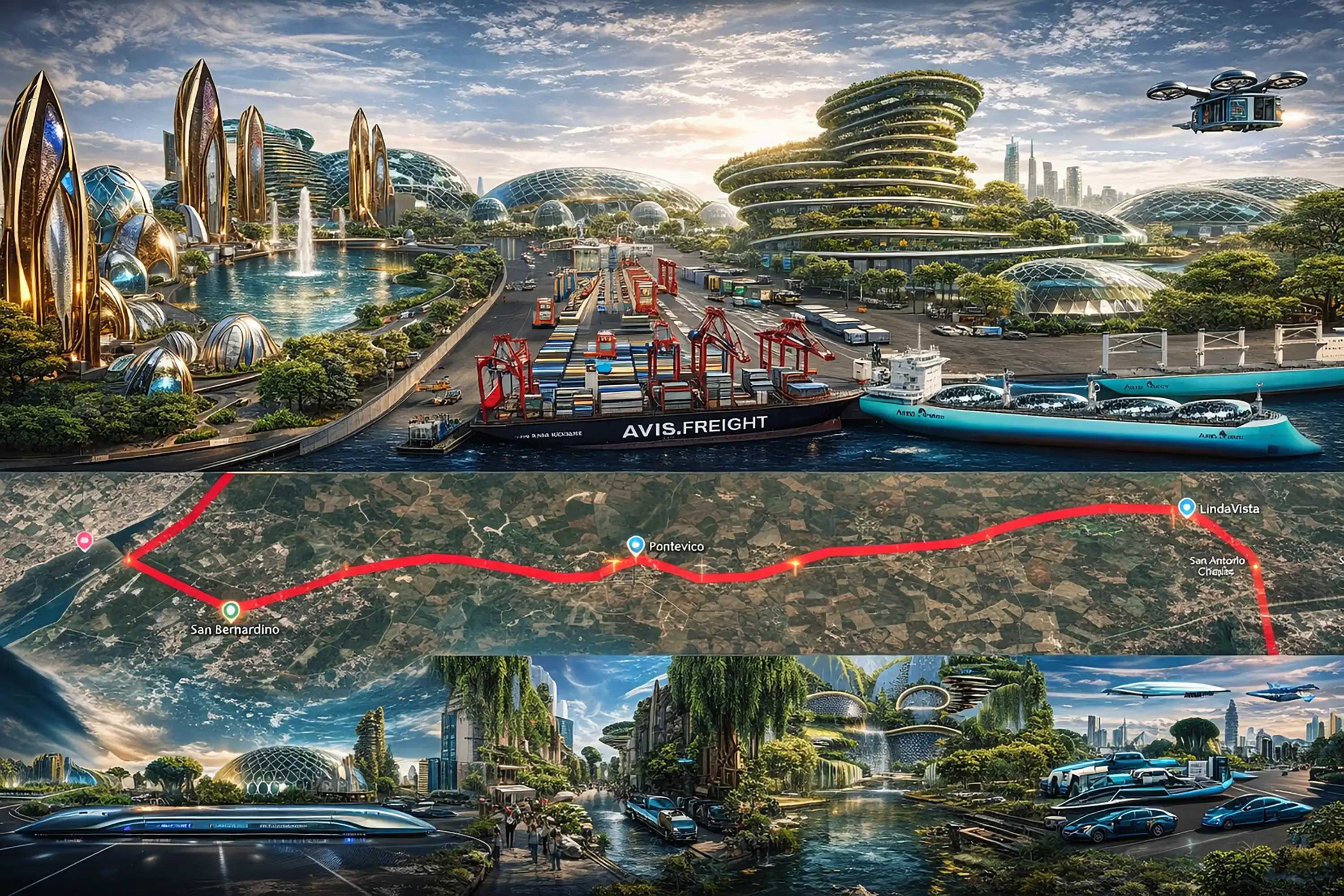
3D KINETIC FUSION PRINTING CITY CONSTRUCTION
Municipal Waste, industrial waste, and toxic waste transformed by VORTEX power and innovative high technology solutions, to Nano Powder
Colombia Franchise Project
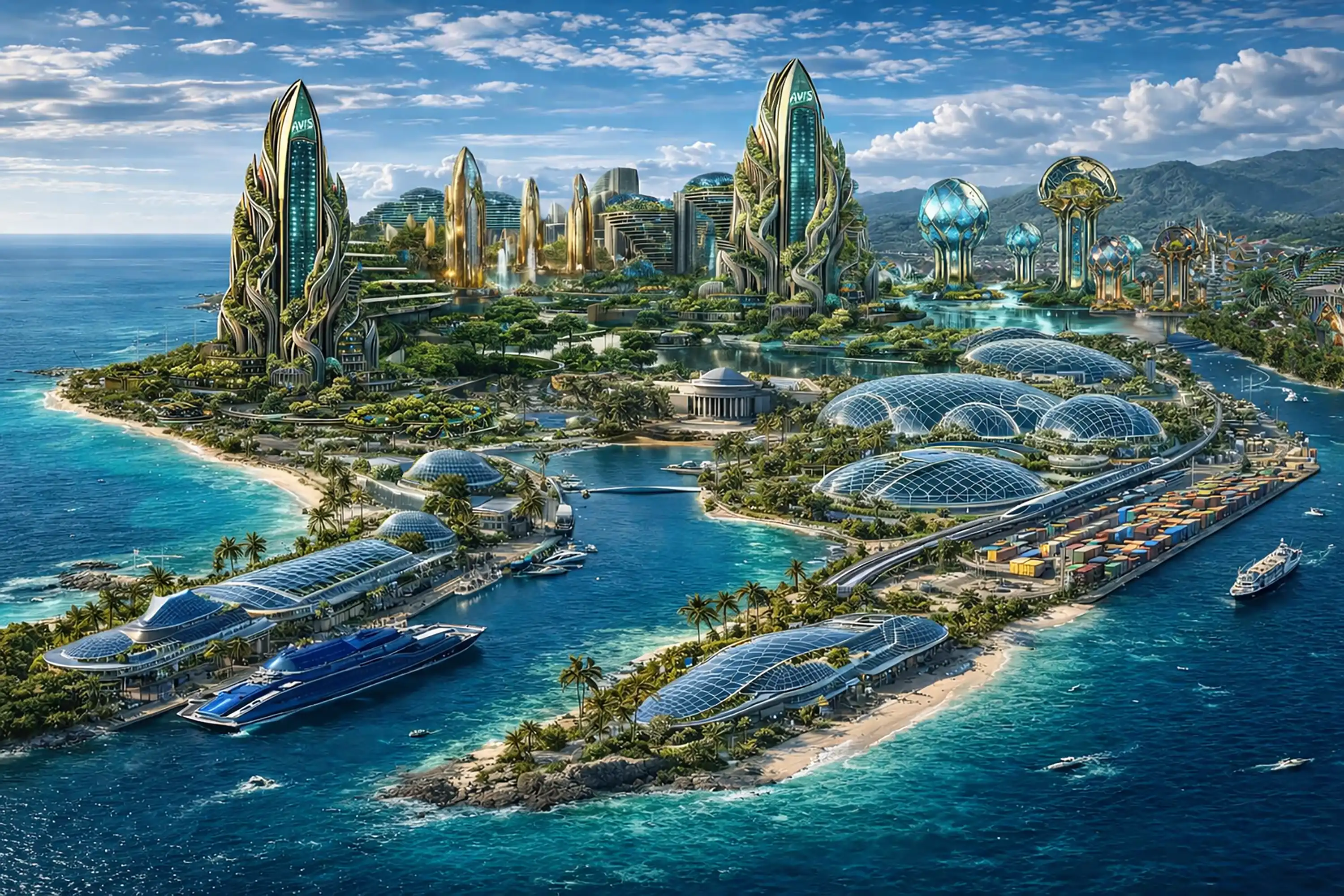
INDUSTRIAL SMART GREEN CITY KINETIC FUSION PRINTING
Franchise Developments in 65 Countries
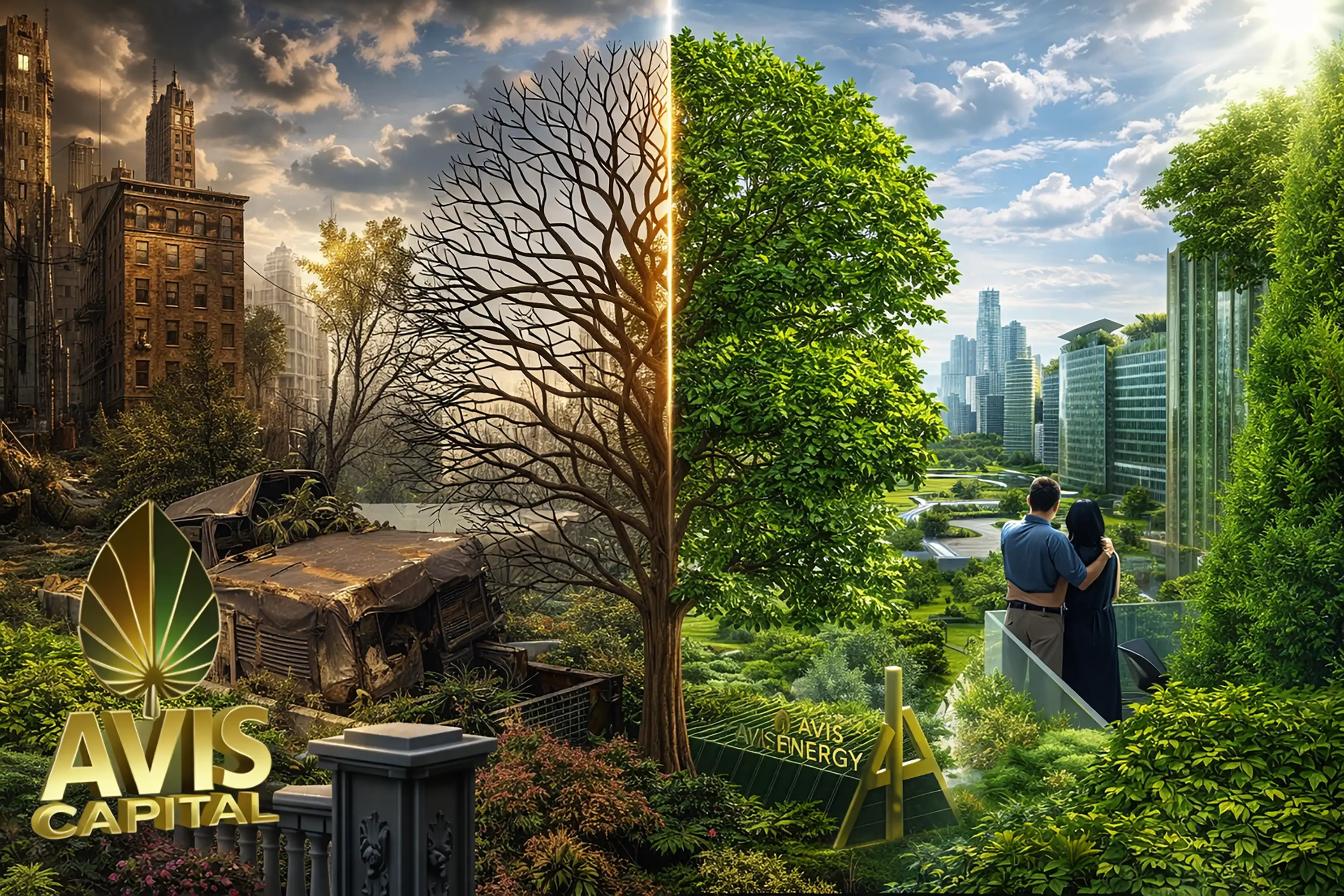
Turning Waste into a Green Lifestyle
Abu Dhabi Industrial Green City – 3D Nano Powder High-Tech Printing Development
Abu Dhabi Industrial Green City is a next-generation, fully integrated high-tech manufacturing ecosystem dedicated to large-scale 3D nano powder construction and advanced material innovation.
The development combines waste-to-nano-powder conversion, AI-controlled kinetic fusion 3D printing, and carbon-graphene composite engineering into a single, vertically integrated industrial platform.
Designed as a self-sustaining smart industrial city, the project unites:
-
High-volume waste-to-nano-powder recycling facilities
-
Robotic kinetic fusion 3D printing construction systems
-
Advanced materials research and prototyping laboratories
-
Renewable decentralized energy generation infrastructure
-
Smart logistics and automated production hubs
The Industrial Green City transforms municipal, industrial, and mineral resources into high-performance nano materials, which are directly processed into buildings, infrastructure components, mobility systems, and advanced engineering products.
Through precision robotics, closed-loop material cycles, and decentralized energy architecture, the development represents a scalable blueprint for sustainable industrial urbanization — engineered for efficiency, circular economy integration, and long-term environmental neutrality.
Abu Dhabi Industrial Green City stands as a flagship model for high-tech green manufacturing, combining industrial performance with ecological responsibility at metropolitan scale.
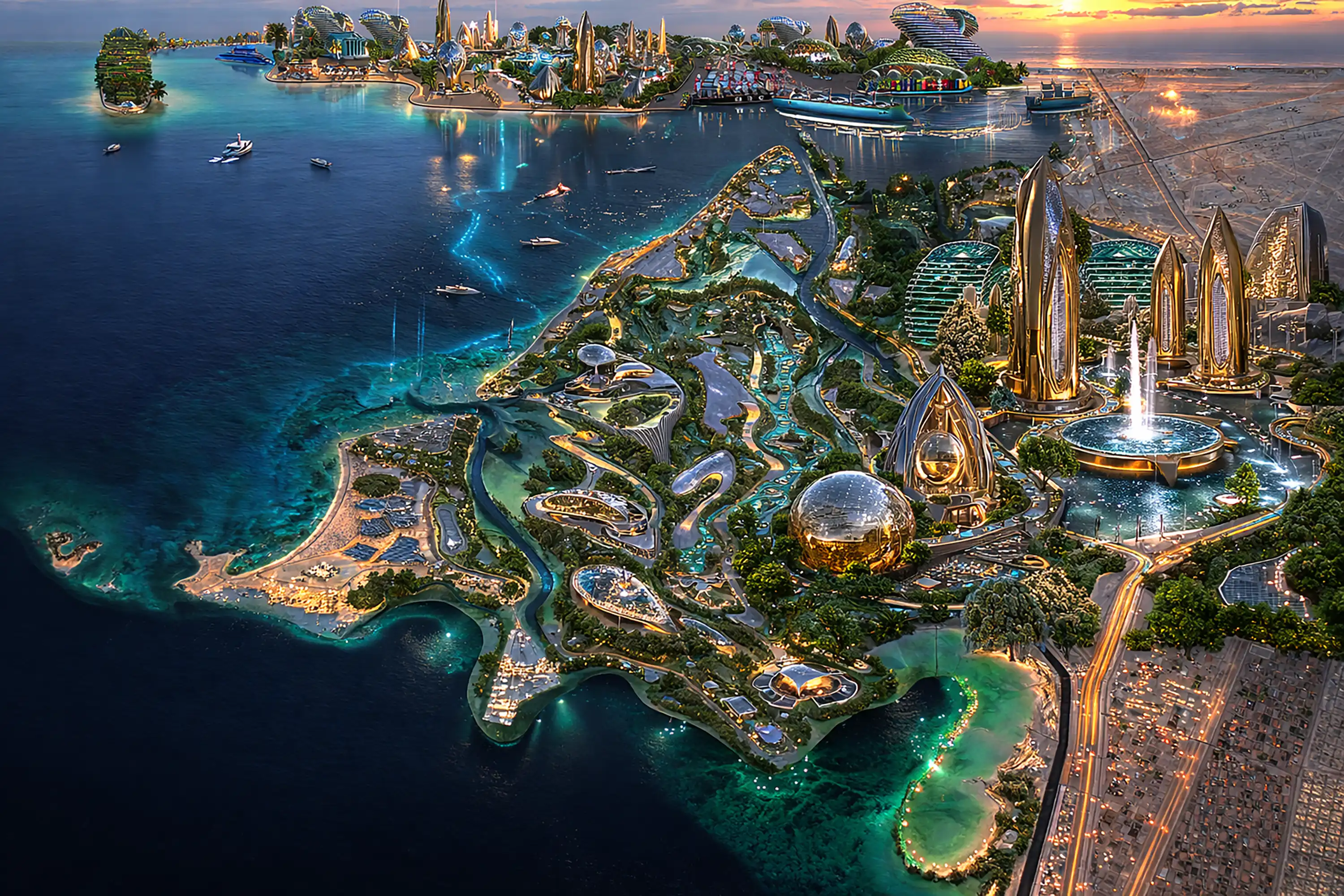
TEXAS – GALVESTON | MASTER DEVELOPMENT OVERVIEW
**Reference Concept | Initial Ground Plan Framework**
Strategic Location
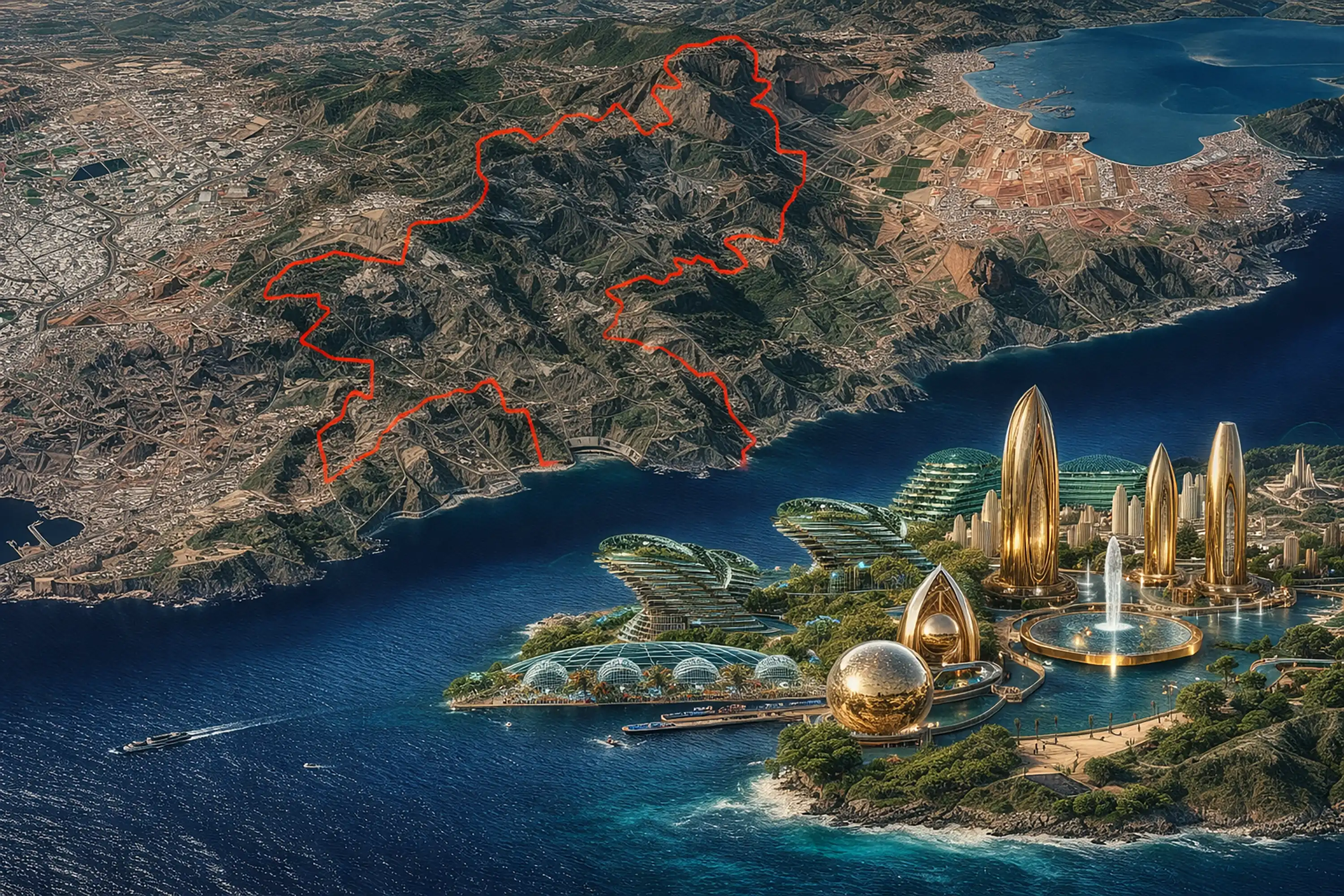
The proposed construction site is located in the greater Galveston, Texas coastal corridor. The selected land parcels provide direct proximity to deep-water port infrastructure, established transport routes, and scalable expansion areas for industrial, residential, and research facilities.
The layout represents a master-planned reference framework designed to integrate high-tech production, sustainable urban living, and maritime logistics into one cohesive ecosystem.
---
GREEN SMART CITY – INTEGRATED INDUSTRIAL & URBAN HUB
A next-generation coastal development combining advanced materials engineering, circular waste processing, food security systems, and high-density vertical living — engineered as a fully integrated smart city platform.
---
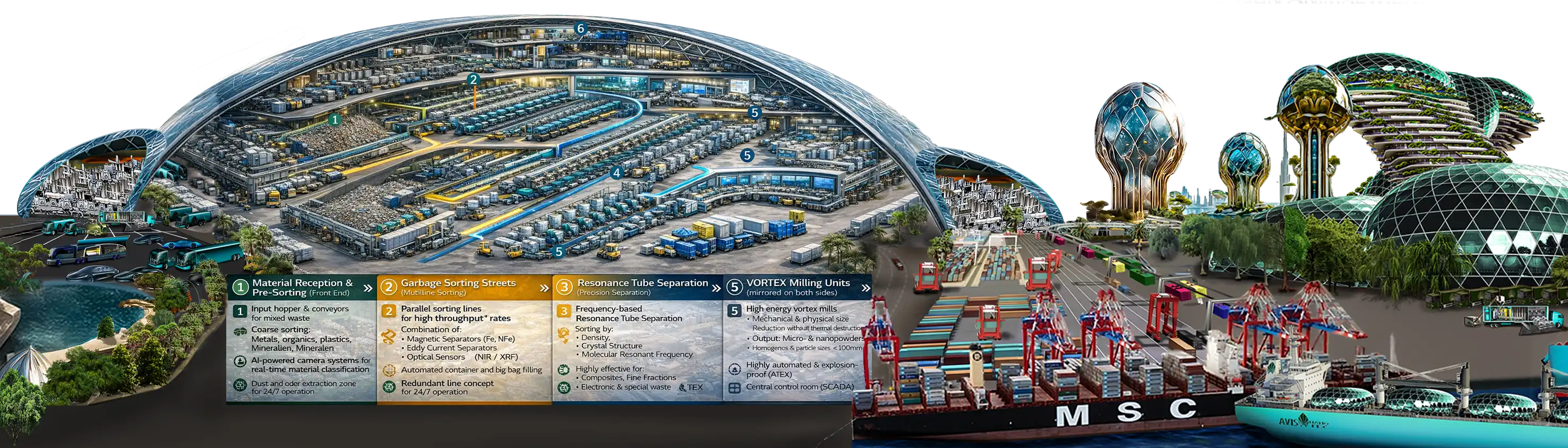
1. Graphene–Carbon Glass Dome VORTEX Waste Milling Plant
**91,000 m² High-Tech Industrial Core**
A landmark industrial structure enclosed within a transparent Graphene–Carbon Glass dome, housing the VORTEX waste milling and nano-material conversion facility.
* Fully automated waste-to-nano-powder processing system
* Circular economy material recovery
* High-efficiency separation, milling, and material refinement
* Climate-controlled dome architecture for optimized operational stability
* Designed as the primary raw-material source for 3D printing operations
This facility forms the technological heart of the development.
---
2. Direct Port Integration & Suspended Monorail Logistics
* Direct dock-to-plant access from the Galveston port infrastructure
* Dedicated industrial loading terminals
* Suspended monorail freight system connecting port, milling plant, and manufacturing zones
* Continuous-flow logistics design minimizing ground congestion
The transport system is engineered for uninterrupted material movement from vessel unloading to industrial processing.
---
3. 3D-Printed Graphene–Carbon Glass Greenhouse Complex
**63,000 m² Controlled Agricultural Infrastructure**
Advanced climate-optimized greenhouse structures produced via large-scale 3D printing using graphene-carbon composite materials.
* Year-round vegetable and fruit cultivation
* Alternative protein and plant-based production facilities
* Smart irrigation and AI-controlled nutrient systems
* Integrated energy recovery and water recycling systems
This agricultural platform ensures local food autonomy and reduces external supply chain dependency.
---
4. “AVIS Tower” Vertical Engineering Campus
Multiple 30+ storey landmark towers constructed using large-scale 3D Carbon-Graphene composite printing systems.
* +200 residential units
* Accommodation for approximately 1,000 engineers and specialist personnel
* Integrated laboratories, research facilities, and satellite offices
* Service infrastructure supporting more than 5,000 high-value technical jobs
The towers operate as the living and innovation hub of the High-Tech City and Waste Processing Center.
---
5. Paradis City Waterfront – “TORTUGA” District
A premium coastal residential and leisure zone designed with organic architectural geometry.
* Waterfront villas and mid-rise luxury residences
* Marina promenades and green corridors
* Integrated coastal protection landscaping
* Tourism and hospitality integration
The district represents the lifestyle and residential dimension of the smart city framework.
---
6. Yacht Harbour Infrastructure
* Mooring capacity for yachts from 6 meters up to 200 meters
* Deep-water marina basin
* High-end marina services and technical support facilities
* Direct access to Gulf maritime routes
Designed to position the development as both an industrial and luxury maritime destination.
---
Underground Infrastructure & Mobility Concept
To preserve surface-level green space and optimize urban functionality:
* Underground traffic center
* Multi-layer car park systems
* Logistics tunnels for service and freight circulation
* Capacity planning for a metropolitan population exceeding 500,000 residents
All vehicle-heavy infrastructure is designed below ground level to maintain a pedestrian-focused, green surface environment.
---
Positioning Statement
The Galveston Green Smart City project is conceived as a scalable, high-performance industrial-urban ecosystem — integrating nano-material production, 3D printing technology, sustainable agriculture, vertical residential engineering, and maritime logistics into a single coordinated development platform.
It represents a blueprint for advanced coastal infrastructure where industrial efficiency, environmental responsibility, and high-value urban living converge into one engineered system.
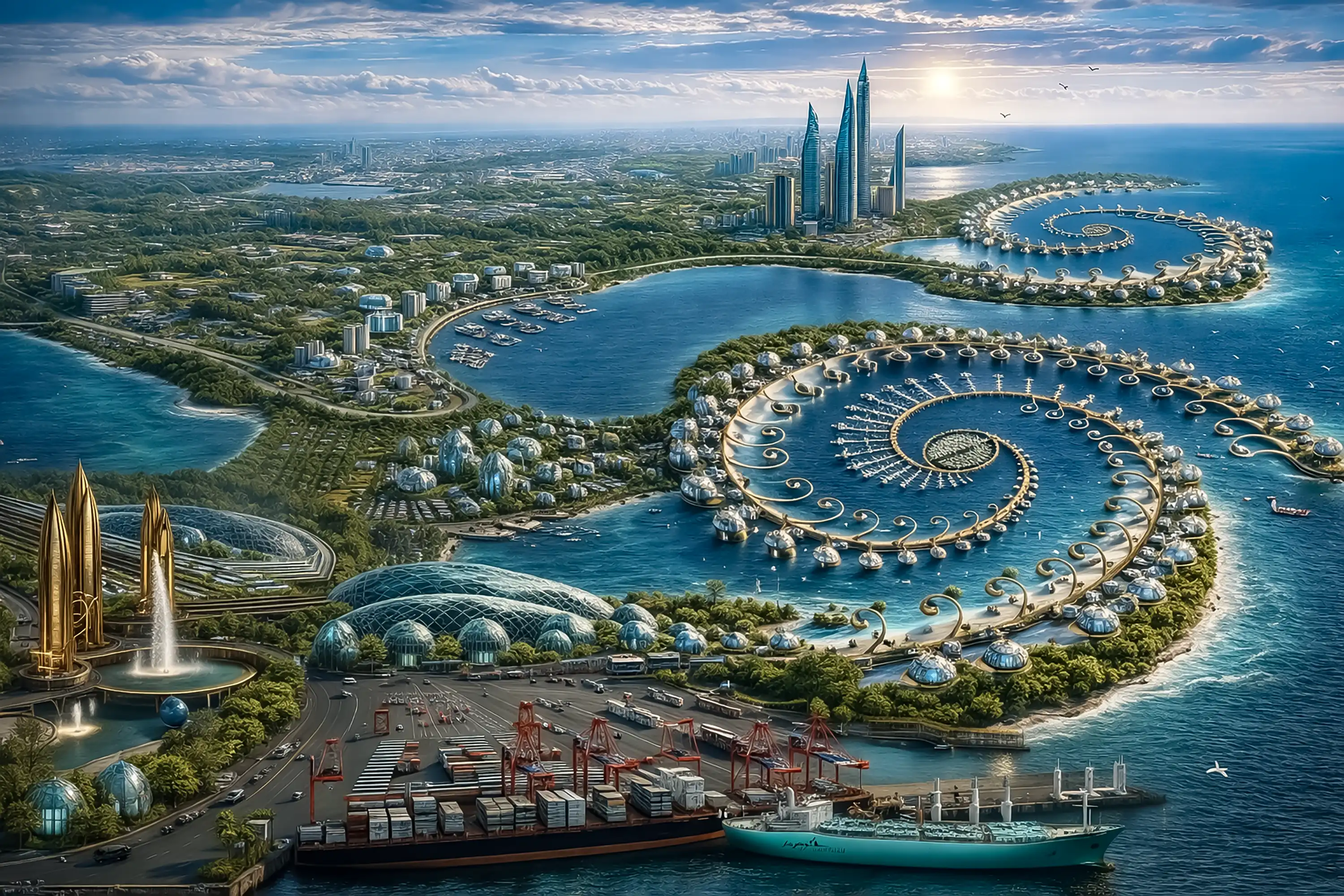
SPAIN Franchise Project
3D Printer
3D printing (sometimes referred to as Additive Manufacturing (AM)) is the computer-controlled sequential layering of materials to create three-dimensional shapes. It is particularly useful for prototyping and for the manufacture of geometrically complex components
So has been started
3D printing is sometimes hailed as a revolution for architecture and construction. In fact is much faster and cheaper than conventional building, and that it has a smaller environmental footprint. But so far, machine-printed buildings have not materialized in significant numbers. Most examples are one-offs and are not fully habitable. The technology is hard to reconcile with building codes, and large-scale printers are scarce and expensive
However, robotic architecture is still maturing. Recent examples include an office space in Copenhagen (2017) and a micro-home in Amsterdam (2016). Last March, an Austin startup named Icon debuted a tiny 3D-printed house, built in less than 48 hours, at South by Southwest
AVIS teams merger with large constructors for converting their production into the new 3 kinetic fusion printing technology by using nano powder
Construction land requirements
for a single facility
250.000m2 = 500m x 500m
multiplied by units of processing domes, plus units of greenhouses
plus the city paradise leaving infrastructure
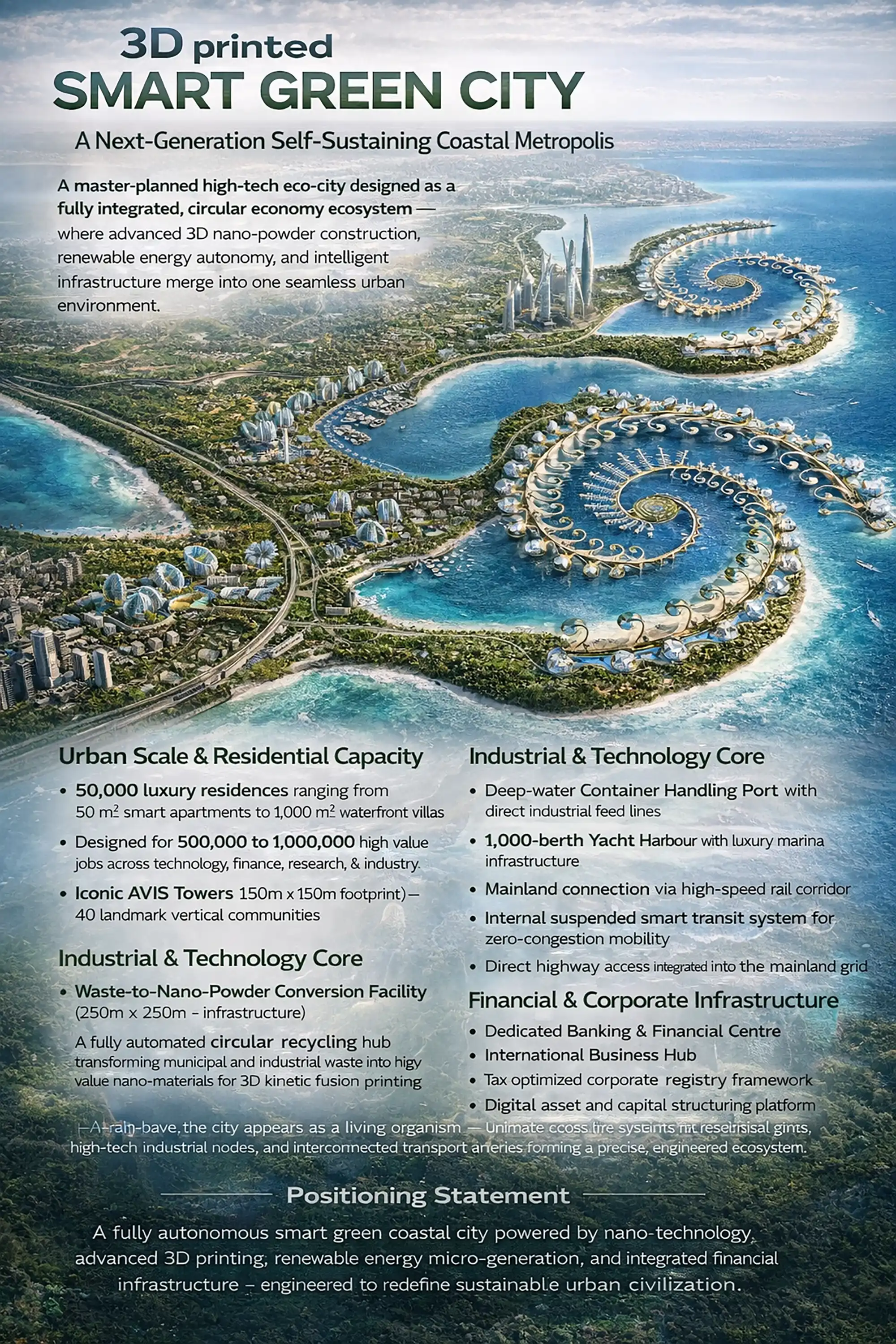
200 facilities we have agreed for to be constructed now worldwide
each facility converts up to twenty million metric tones rubbish to nano powder and produce with the latest reactor technology one GW of electric power


Order your franchise facility
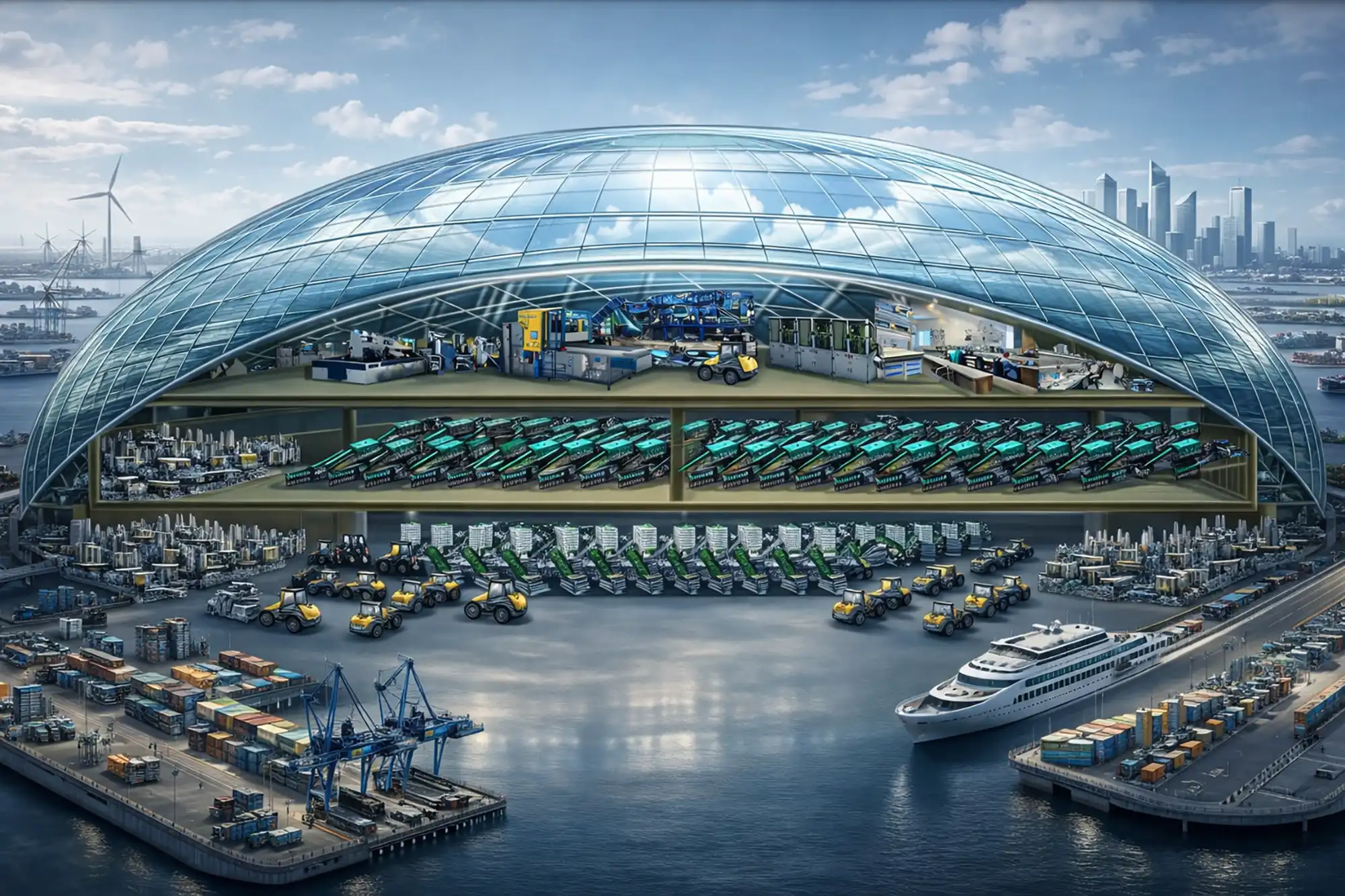

From 2005 up to 2023 we have launched worldwide
the construction of 200 high-tech
facilities embedded into a
green infrastructure
If you're interested in a green industrial park for your location
please request a callback from our team members
- Products
- AVIS Bank
- AVIS Capital
- Computer
-
Green Environment Construction
-
Shipping
- Laboratories Equipment
- 3D Printer World
-
E-Car Industry
- Electro Recollection Robots
- Electro Trucks
- 3D Printed Carbon Graphene AVIS Electro Cars
- 3D Printed Electro Robots
- 3D Printed Electro Trucks
- 3D Printed Electro Waste Trucks
- e-Bus Market
- e-Cars Market
- 3D Printed Graphene AVIS Electro Cars
- 3D Printed Graphene AVIS Electro Cars
- 3D Printed Graphene Electro Trucks
- Aeronautic
- Space Industry
- Industrial Heavy Equipment
- Transport & Logistic Equipment
- Train High Tech
- Insurance
- Corporate Governance
- Legal Support
- Industrial Architecture
- Designers / Prototyping & Production
- Project Constructors
- Healthcare
- Green Life Power Generators
- Organic Fashion
- Luxury World
- Smartphones
- Software
- TV
- WebPage Designers
- Press & Print
- Digital Money
- Publisher
- Photography
- Real Estate Market
- Hotel & Real Estates
- Tourismus International
- Traveling
- Mining Equipment
- Electric Power
- WhiteWest
- Alternative Meat
- Compressor
- Collection
- Cash Transfers
- Fintech Banks
- 3D Meat Printing
- Graphene
- Crypto Currency
- AVIS Simmtronics
- Energy Park Constructs
- Organic Alternative Food
- Environment Construction
- YACHT WORLD
- organic
- Health
- bank
My Account
AVIS for You
AVIS Bank Online
If you don't have still a AVIS Bank account?
Register Your personal account
Register Your business account
Service
Download Center


AVIS Umbrella

AVIS Logistic LTD
Vyman House, 104 College Road,
Harrow, Middlesex HA1 1BQ
United Kingdom
E-Mail customer@avis.land
Reception ☎️ +44 2392 16 2001
US Direct ☎️ +1 903 669 1660
WhatsApp +34 640 350 260
Skype: avisglobal